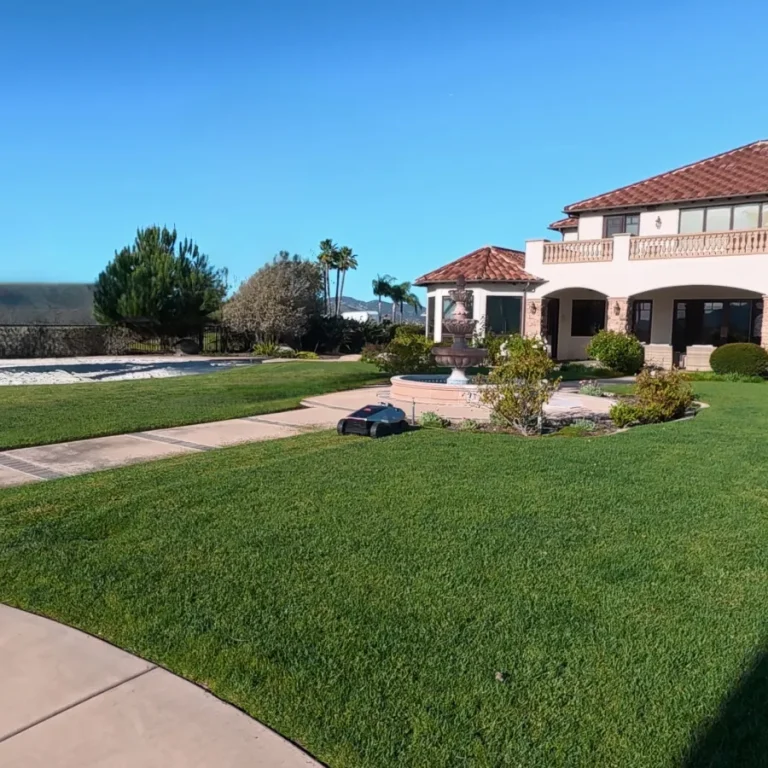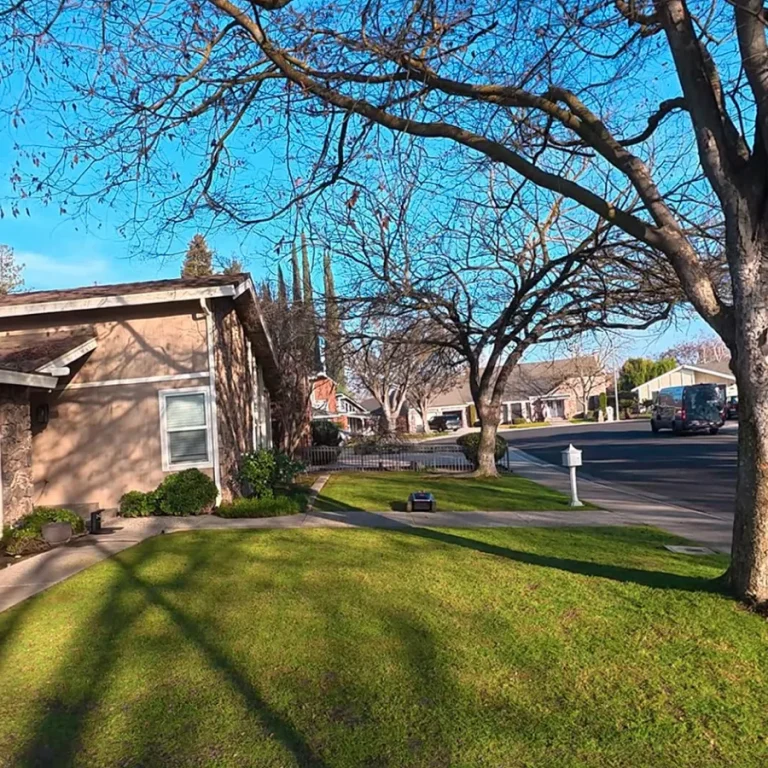
Picture a property where the front lawn slopes toward the street, a fenced backyard sits behind the house, and a side strip runs past the garden beds — three separate stretches of grass, divided by a driveway, a walkway, and a gate. For most homeowners with sprawling or segmented yards, this is the everyday reality. And for years, it was exactly the kind of layout that confused robotic mowers built for simple, single rectangles of turf.
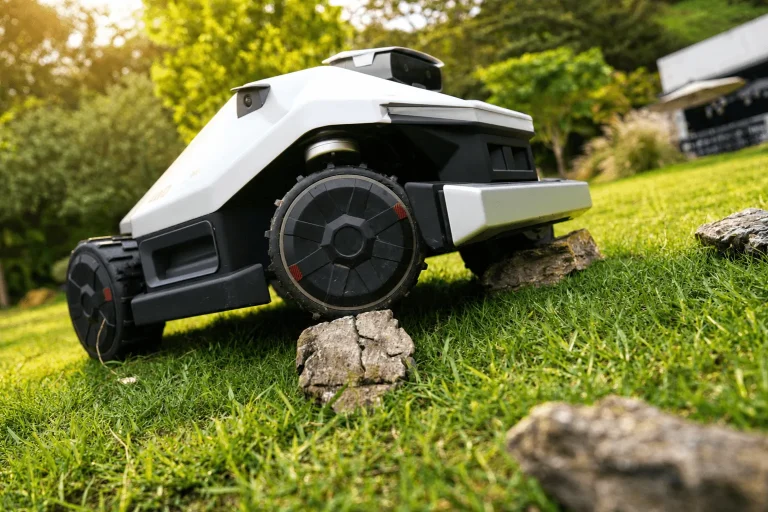
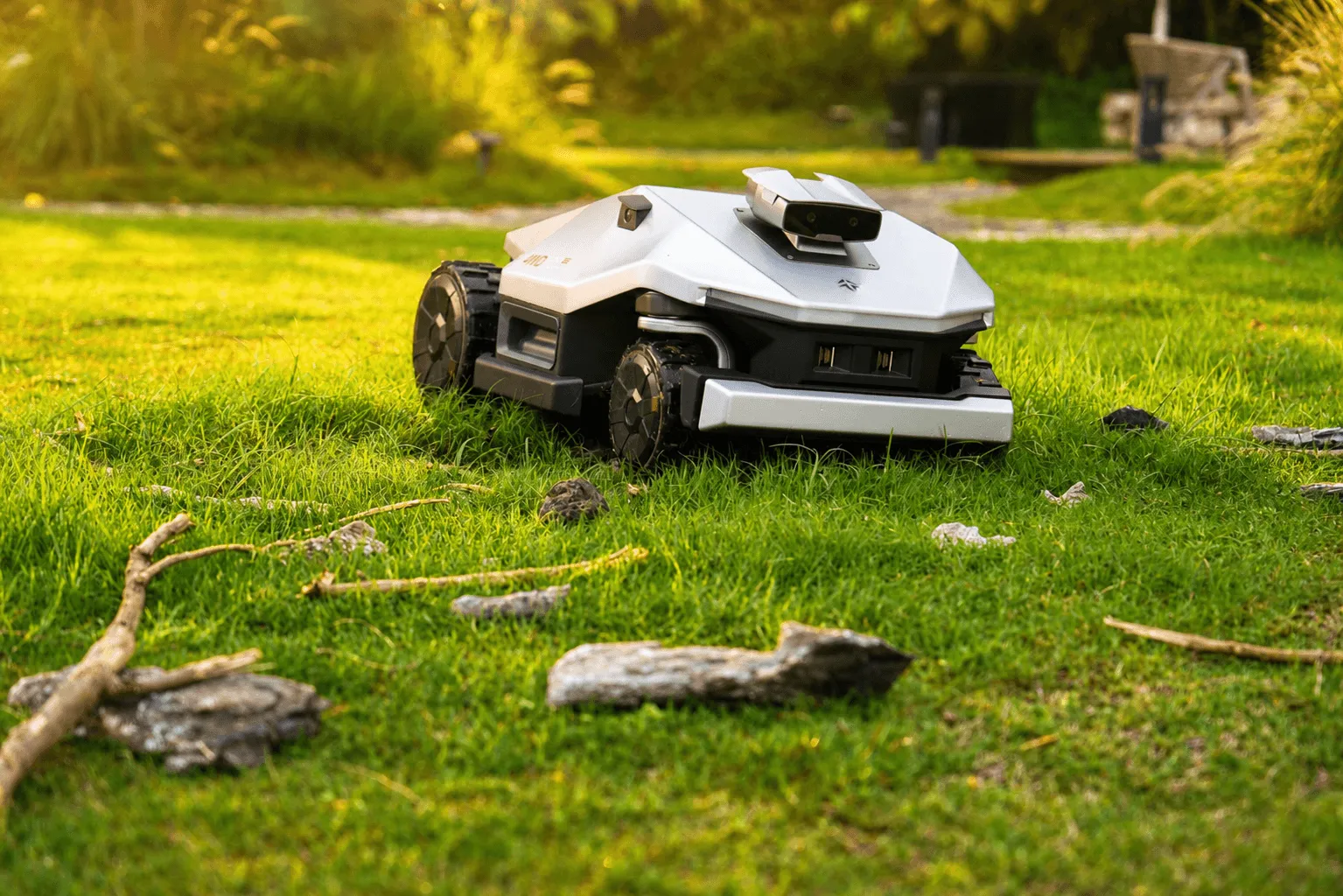
This is the problem the GoKo Robot Lawn Mower was engineered to solve. As the consumer robotics brand of Robot++ — a company with over a decade of experience building robots for high-risk surface operations — GoKo brought industrial-grade navigation to the residential lawn. The result is the GOKO M6, a pro-grade machine designed not just to cut grass, but to intelligently manage complex properties as one connected system. At the heart of that capability is its approach to multi-zone management. Let’s break down how it actually works.
What “Multi-Zone” Really Means for a Robot Mower
A multi zone robot mower is one that can recognize, store, and independently maintain several distinct areas of a property rather than treating the whole yard as a single undivided patch. In practice, a “zone” might be your front yard, a back garden, a side passage, or even a no-go region you want the mower to avoid entirely.
The industry has converged on a clear principle here: handling a robot lawn mower multiple zones scenario well depends on two things working together — accurate positioning and flexible digital mapping. According to navigation research across the category, RTK (Real-Time Kinematic) positioning adds a layer of locational certainty that simplifies multi-zone coordination, allowing separate digital maps to be created for areas such as front yards, backyards, and side lawns, with the mower navigating defined corridors between them. The GoKo M6 takes that foundation and pushes it further.
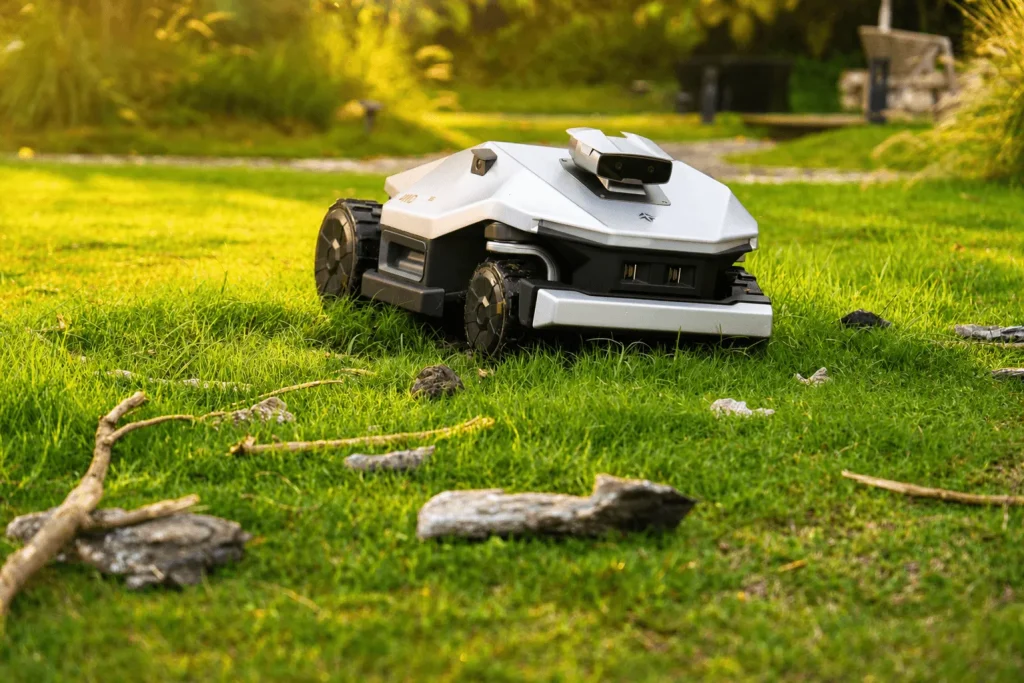
The Engine Behind GoKo’s Multi-Zone Mastery: CyberNav™ Fusion Navigation
Single-sensor mowers tend to stumble in segmented yards. A pure-GPS unit can lose accuracy under a tree canopy; a pure-vision unit can struggle in low light. GoKo’s answer is sensor fusion.
The GOKO M6 uses CyberNav™ Fusion Navigation, which combines four data sources — RTK, VSLAM (visual simultaneous localization and mapping), IMU (inertial measurement), and wheel tracking — to deliver ultra-stable navigation across obstacles and complex yards. The advantage of fusing these inputs is redundancy: when one signal weakens, the others compensate. This matters enormously for multi-zone work, because moving between separated areas means crossing exactly the kinds of transitions — narrow passages, shaded corridors, hard surfaces — where a single sensor is most likely to falter.
This mirrors a wider shift in the category. The real value of fusion-based RTK navigation, as multiple manufacturers now describe it, is transforming robotic mowers from “random coverage” devices into precise path-planning systems that know exactly where they have been and where they still need to go. For a homeowner managing multiple zones, that precision is the difference between a reliably striped lawn and a patchy, half-finished one.
Unlimited Zones: Where GoKo Pulls Ahead
Here’s where GoKo’s specification sheet stands out. Many robotic mowers cap the number of zones or working areas you can define. The GOKO M6, by contrast, officially supports Unlimited Zones for multi-zone management, backed by map storage capacity of up to 60,000 m² (15 acres).
For most consumer properties, “unlimited” effectively removes a ceiling that competitors still impose. Whether your land is broken into three tidy lawns or a dozen irregular pockets separated by flower beds, paths, and structures, the M6 can hold each one as its own mapped area. That generous map storage also means the mower isn’t forced to discard and re-learn your property — it retains the full layout, which is what makes consistent, repeatable mowing across a large, segmented estate practical rather than aspirational.
Independent Settings: The Detail That Makes Zones Genuinely Useful
Mapping multiple zones is only half the equation. The feature that turns mapping into real lawn-care intelligence is independent, per-zone control — and this is where GoKo’s app-driven approach earns its keep.
Different parts of a yard rarely have the same needs. Your front lawn might be fine, ornamental fescue that looks best cut short with crisp stripes; your back paddock might be thick, fast-growing grass that needs a higher, more frequent cut. With the GoKo M6, you can set mowing zones, cutting height, stripe angle, and schedules directly from your phone, then track sessions and receive instant notifications. Because these parameters are configurable, a homeowner can tailor each area rather than forcing one compromise setting across the whole property.
That granular control pairs with the M6’s hardware flexibility: a floating deck adjustable from 1″ to 4″ (25–100 mm) and dual blade options — razor discs or rotary mulching blades — backed by 1500W peak output. The practical upshot is that “independent settings” isn’t just a software checkbox; the machine has the physical range to act on the different instructions you give each zone.
How the M6 Travels Between Zones Safely
A mower that manages multiple zones must also move between them without trouble, and often without supervision. Two M6 systems make those transitions dependable.
First, navigation. The CyberNav™ fusion stack keeps the mower oriented as it threads through the narrow corridors that typically connect separated lawns — the same passages where less sophisticated systems get lost. Second, safety. The M6’s AI-Powered QuadVision uses four AI cameras to recognize over 200 object types, from people and pets to toys and furniture, enabling intelligent obstacle avoidance throughout the run. When a mower is crossing a side path or rounding a fence to reach the next zone, that recognition layer is what keeps the journey safe and uninterrupted.
It’s worth being realistic, as the broader category acknowledges: fusion and vision systems greatly reduce the weak spots of any single approach, but environmental factors like extremely dense canopy or heavy rain can still affect performance. GoKo addresses the latter with built-in rain detection, allowing the mower to respond to conditions rather than plow ahead regardless.
Why This Matters for Large and Complex Properties
Pulling it together, GoKo’s multi-zone design is purpose-built for the customer it set out to serve — owners of large, demanding, or awkwardly divided lawns. The M6 is rated for slopes up to 42° (90% grade), covers up to one acre per charge with an expandable battery, and stores enough mapping for genuinely large estates. Layer unlimited zones and independent per-zone settings on top of that hardware, and you get a single machine capable of treating a multi-part property as one coordinated maintenance system.
For anyone whose yard has never fit the tidy, single-rectangle assumption that older robotic mowers were built around, that’s the real promise of the GoKo Robot Lawn Mower: not just automated cutting, but intelligent, zone-by-zone management of the whole landscape.